Care
Teething: what helps, what doesn't, and what to keep away
Teething gets blamed for a lot. Some of it is fair: sore gums, drool, a baby who wants to chew everything. Here is what actually helps, and the popular remedies worth skipping.


On this page
Most babies get their first tooth somewhere around six months. A few start much earlier, some not until after their first birthday, and both are normal. The first to come through are usually the two bottom front teeth, followed a while later by the top four. All twenty baby teeth are usually in by about age three.
That is a lot of teething, spread over a long time, so it helps to know what is really teething and what isn't, and what you can safely do about it.
What teething looks like
The signs most babies show when a tooth is on its way:
- drooling, often a lot of it
- chewing on everything: hands, toys, your shoulder
- swollen or tender gums
- crankiness, and sometimes more waking at night
- a slightly raised temperature, though not a real fever
What teething doesn't cause, according to the American Academy of Pediatrics, is a high fever or diarrhea. If your baby has a fever of 100.4°F (38°C) or higher, is unusually sleepy, or just seems unwell, call your pediatrician rather than putting it down to teeth. Teething happens for so long that it is easy to blame it for an ear infection or a stomach bug that happens to arrive at the same time.
What helps
Something firm to chew
Pressure on the gums eases the ache, which is why babies bite everything. A solid teether made of silicone or rubber is the simplest help. Chilling it in the fridge adds a little numbing cold. Skip the freezer: a frozen teether is hard enough to hurt sore gums.
Different babies like different shapes. Some want something long enough to reach the back of the mouth, others want something they can hold in a fist. A crochet rattle with a wooden handle gives them a wooden handle to gnaw and a soft crochet part to hold. Textured sensory balls have bumps and ridges that seem to be satisfying on sore gums, and they double as a toy.
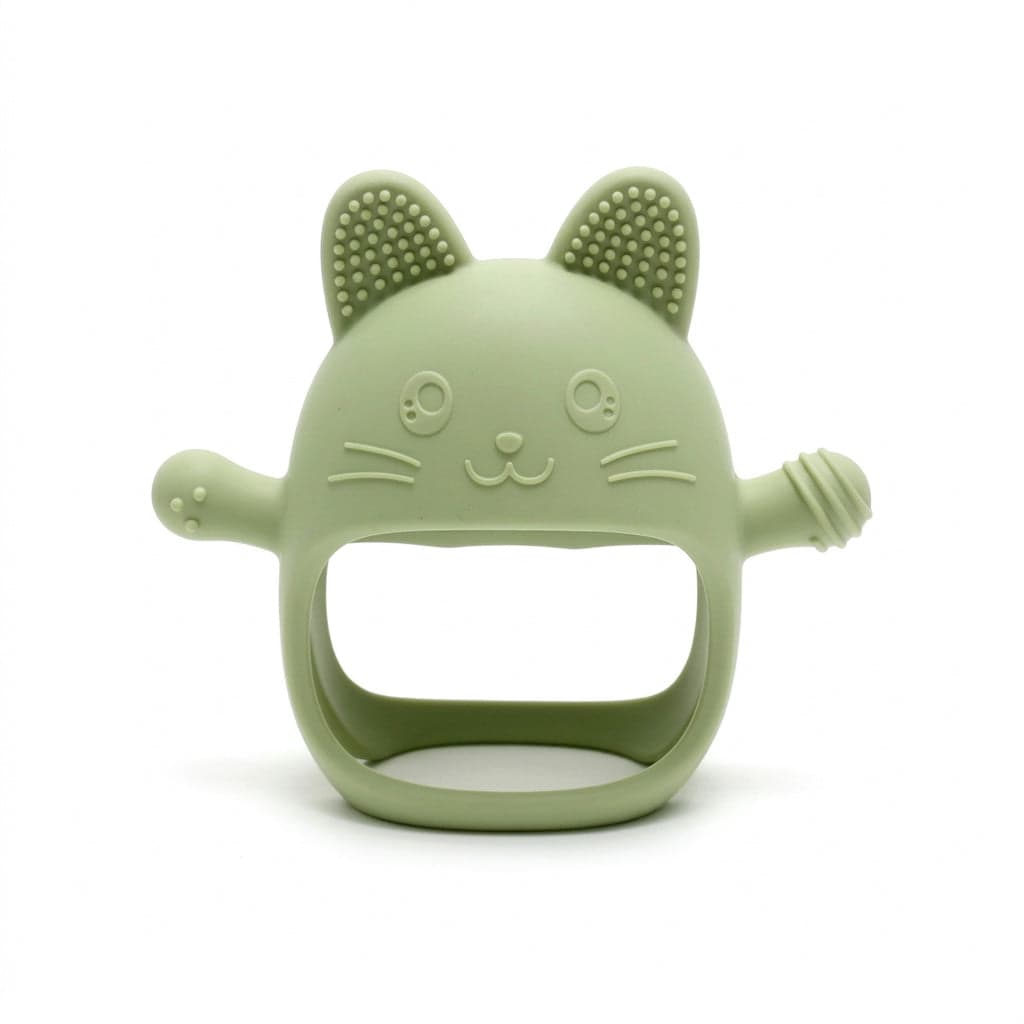
A silicone teething mitten solves a specific problem: babies who are too young to hold a teether for long, or who keep dropping it. It straps onto the hand, and the silicone surface gives them something better than their own fist to chew. Some babies love it and some pull it straight off; it is worth a try either way. Take it off for sleep, and wash it often.
Your finger
Wash your hands and gently rub your baby's gums with a clean finger for a minute or two. It is free, it is always there, and many babies find it very soothing.
Something cold, once they eat solid food
For babies who have started solids, cold food can help: chilled yogurt, cold purees, or chilled fruit in a mesh or silicone feeder. A clean, damp washcloth that has been in the fridge is good to chew on too. Always stay with your baby when they are chewing on food.
Pain relief, if your pediatrician agrees
If your baby is really miserable, ask your pediatrician about infant acetaminophen, or ibuprofen for babies over six months, and at what dose. Don't guess the dose from an adult bottle.
What to avoid
The FDA has warned against several popular teething remedies. They are still easy to find in shops and online, so it is worth knowing why.
- Numbing gels and liquids with benzocaine or lidocaine. The FDA says benzocaine teething products should not be used on children under two, because it can cause a rare but dangerous condition that reduces the amount of oxygen in the blood. The numbing effect also wears off within minutes, and gels wash away with the drool.
- Homeopathic teething tablets and gels. The FDA has warned parents against them after reports of serious side effects in babies.
- Amber necklaces and teething jewelry. Necklaces, bracelets and anklets worn by a baby carry a real risk of choking and strangulation. The FDA warns against them, and there is no good evidence that amber relieves pain.
- Anything frozen solid, for the reason above.
Pacifier clips and teething
A pacifier clip keeps the pacifier or a teether off the floor, which is useful when a baby is chewing constantly and dropping things just as often. A few rules keep them safe:
- Use them only while your baby is awake and someone is watching. Take the clip off for every nap and every night.
- Clip them to clothing, never tie a pacifier around your baby's neck or wrist, or to the crib.
- Keep them short, and check them before each use. Beads and clips can split with enough chewing, and a loose bead is a choking hazard. Throw out any clip that shows wear.
Our adjustable silicone pacifier clip fits most pacifiers and teethers with a loop, and its length can be shortened.
Drool rash
All that drool can leave the chin, neck and chest red and chapped. Keep the skin as dry as you can: pat, don't rub, and change wet bibs and tops often. A thin layer of a plain barrier ointment, such as petroleum jelly, before naps and bedtime protects the skin.
Absorbent bibs make a real difference during the heaviest drooling weeks. A cotton bandana bib soaks it up before it reaches their clothes, and a muslin bib is lighter for warm days. Have several, and change them as soon as they are wet.
Once the first tooth is through
Start brushing as soon as the first tooth appears. The AAP recommends a tiny smear of fluoride toothpaste, about the size of a grain of rice, on a soft baby toothbrush, twice a day. Book a first dental visit by your baby's first birthday. It is short, it is mostly a chat, and it gets your baby used to someone looking in their mouth.
Sources
About this piece. We sell some of the things mentioned here, and we’ve tried to be straight about when they aren’t the right choice. Health and safety points follow the sources above. They are general guidance, not medical advice about your child.
The things we mention


More from the journal
A calm bath time routine for toddlers and babies
How warm the water should be, how often a small child actually needs a bath, and a routine that ends in bed rather than in tears.
Starting solids: the gear that helps, and what you can skip
You need less than the baby aisle suggests: a safe seat, a soft spoon, something the food can't slide off, and something to catch what falls.
Babyproofing, room by room: what to do first
Most babyproofing lists treat a corner guard and an unanchored dresser as equal. They aren't. This one starts with the jobs that prevent the worst injuries.