Feeding
Starting solids: the gear that helps, and what you can skip
You need less than the baby aisle suggests: a safe seat, a soft spoon, something the food can't slide off, and something to catch what falls.

On this page
Most babies are ready for their first tastes of food at around six months. The first few weeks are more about exploring than eating: a spoonful of mashed banana is as likely to end up in an ear as in a stomach, and that is fine. Breast milk or formula is still doing the heavy lifting.
What makes those weeks easier is not a cupboard full of gadgets. It is a handful of things that keep your baby safe and upright, keep the food roughly in one place, and make cleaning up less of a job. Here is the short list, the nice-to-haves, and what you can leave on the shelf.
Is your baby ready?
Age is a guide, not a start date. The CDC and the American Academy of Pediatrics both suggest around six months, and not before four. More useful than the calendar are the signs. Your baby is probably ready when they:
- sit up on their own or with a little support
- hold their head steady
- open their mouth when food comes towards them
- swallow food instead of pushing it straight back out with their tongue
- bring toys and hands to their mouth, and try to grab small things
If most of those are true, go ahead. If your baby was born early or has any feeding difficulties, check the timing with your pediatrician first.
The short list
1. A safe place to sit
A high chair with a harness, used every time, with your baby sitting upright. Eating reclined, in a car seat, or while crawling around makes choking more likely. A footrest is worth having if the chair offers one; babies sit better and fidget less when their feet have somewhere to go. And a floor seat is for the floor: the CPSC has warned about babies tipping out of them when they are put up on a table or counter.
2. A soft spoon or two
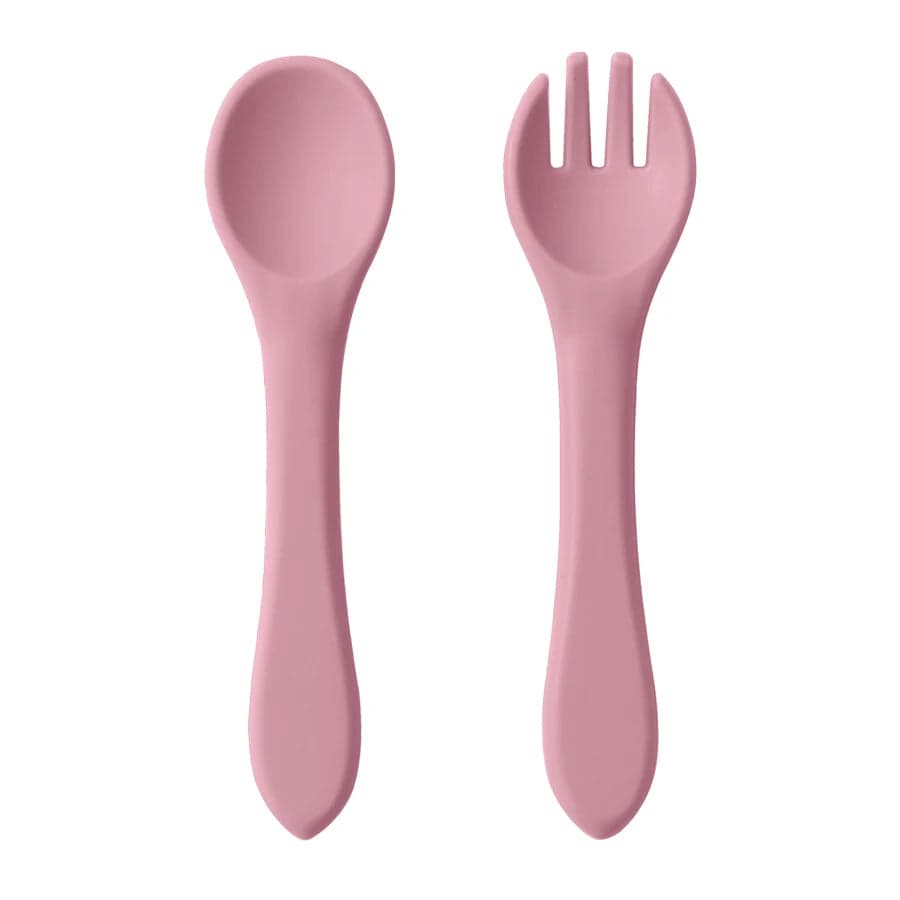
Small, shallow and soft. Silicone spoons are gentle on gums and teething mouths, and babies can hold them without doing damage. Buy two, because your baby will want one while you use the other. A good trick early on is to load a spoon and hold it in front of your baby so they can grab it and steer it in themselves. Our silicone spoon and fork set is 12 to 14 cm long, the right size for small hands, and goes in the dishwasher.
3. A bowl or plate that stays put
Suction bowls and plates are the one piece of feeding gear we would call genuinely useful. A baby's first instinct with a bowl of food is to pick it up and turn it over. A suction base slows that down considerably.
They do have limits, and knowing them saves frustration. Suction needs a smooth, flat surface: most high chair trays are fine, textured trays and wood grain are not. Wipe the tray, dampen the base slightly and press down from the middle. And a determined toddler will eventually learn to peel up the edge. By then, they are usually ready for an ordinary bowl anyway.
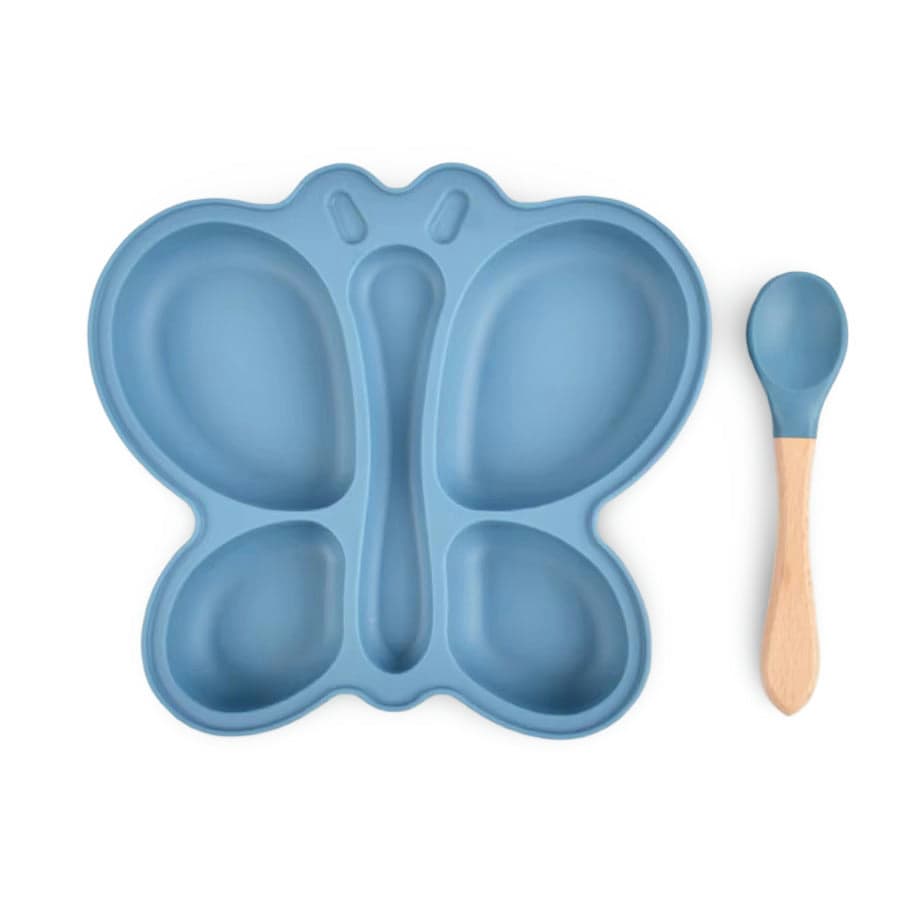
For purees and porridge, a deep bowl is easier to scoop from; the silicone suction bowl is about 12 cm across and deep enough for it. Once finger food arrives, a plate works better. The divided silicone plate set comes with a training spoon, and the stainless steel suction plate suits anyone who would rather not have silicone touching the food; its silicone base comes off for cleaning.
4. A bib you can wipe
Cloth bibs are fine for drool. For meals, a waterproof bib you can wipe or run through the dishwasher is much less laundry. Our silicone bib has an adjustable neck strap, so the same one lasts well past the baby stage.
5. Something under the chair
Not essential, but the floor under a high chair takes a beating for the next year or two. A splat mat is quicker to clean than a rug and can go in the washing machine. Ours is about 120 cm square, which covers the throwing range of most babies, if not all of them.
Worth having, not essential
- A fruit feeder. A silicone feeder lets a baby gnaw on soft fruit without getting a piece too big to swallow, and chilled fruit in one is soothing for sore gums. Use it alongside real finger food, not instead of it: babies still need practice picking up and handling pieces of food. Take it apart to wash, and check it for tears.
- Small containers for batch cooking. If you make your own purees, freezing them in small portions saves a lot of time. Our stackable containers hold 120 to 150 ml each, which is about one meal. Label them with the date, and reheat in a bowl, stirring well and checking the temperature, because microwaves heat unevenly.
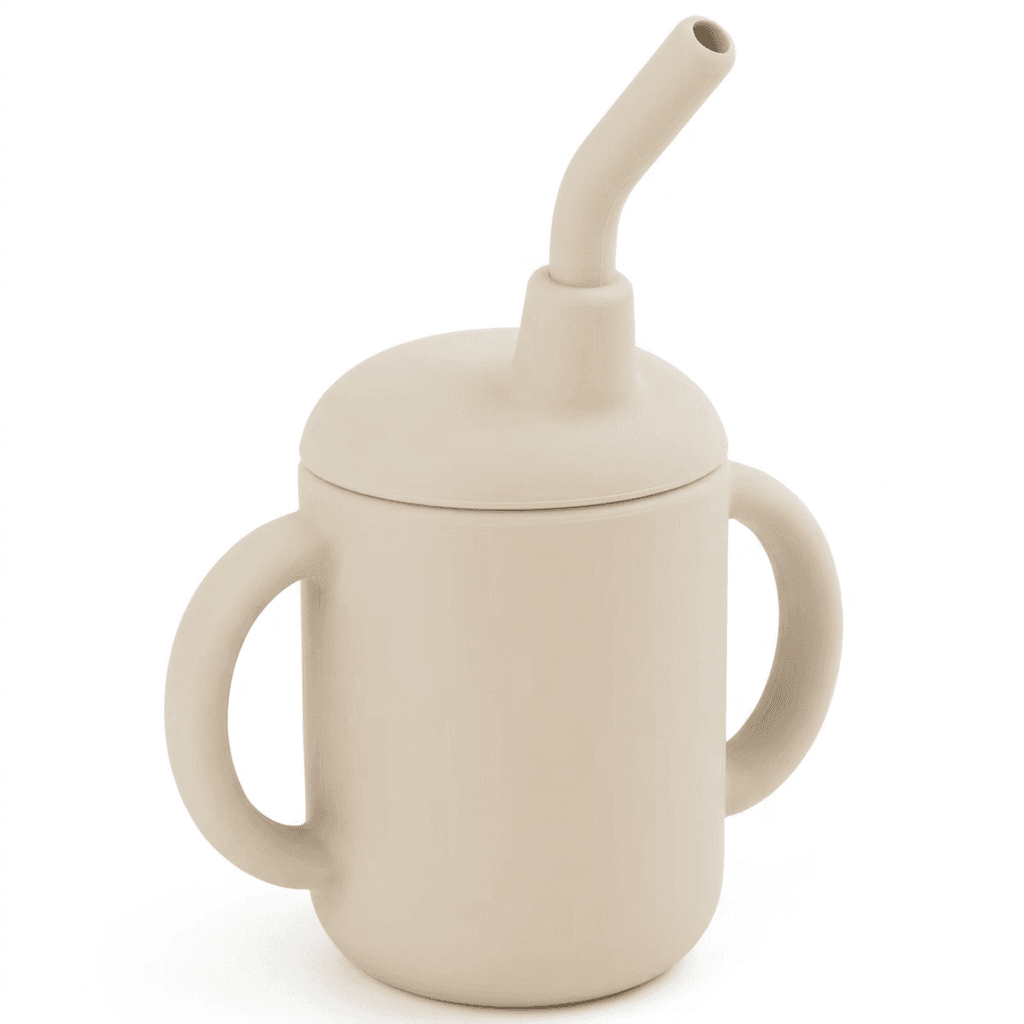
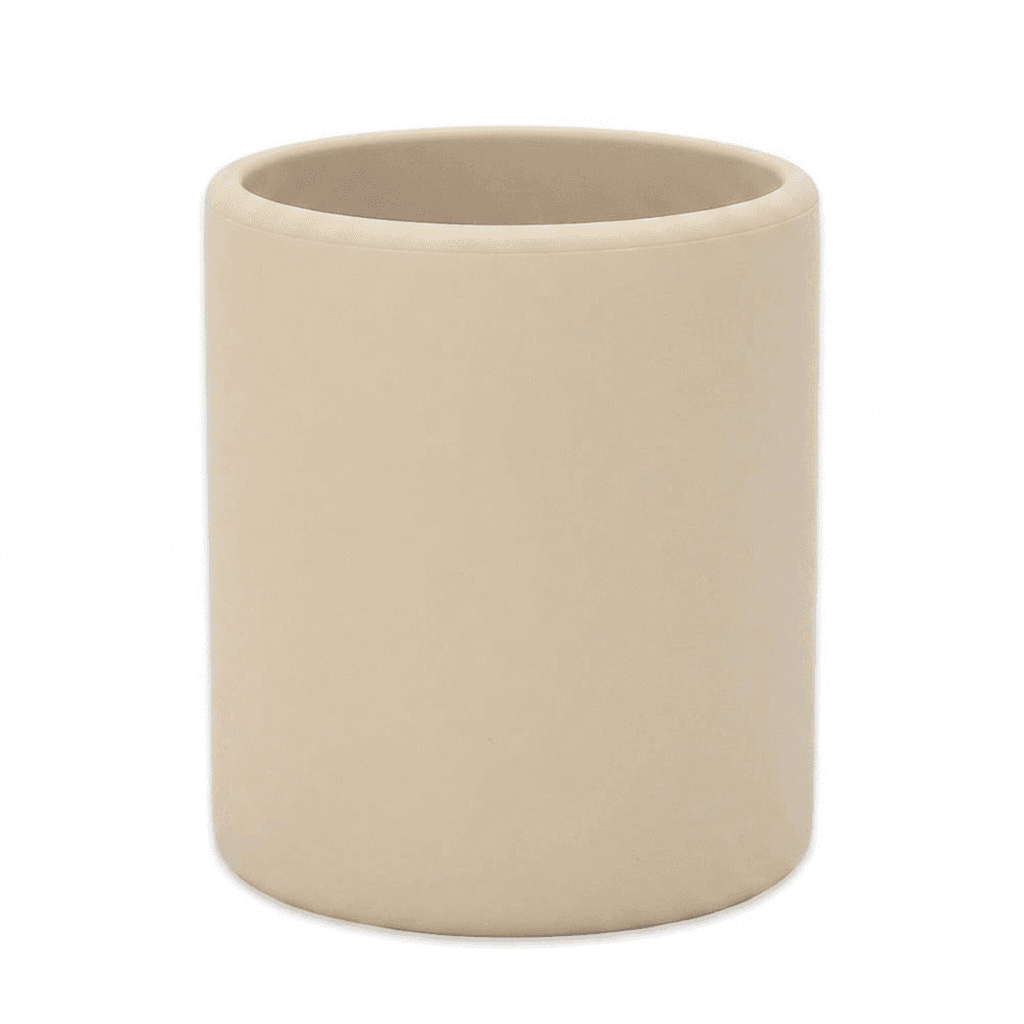
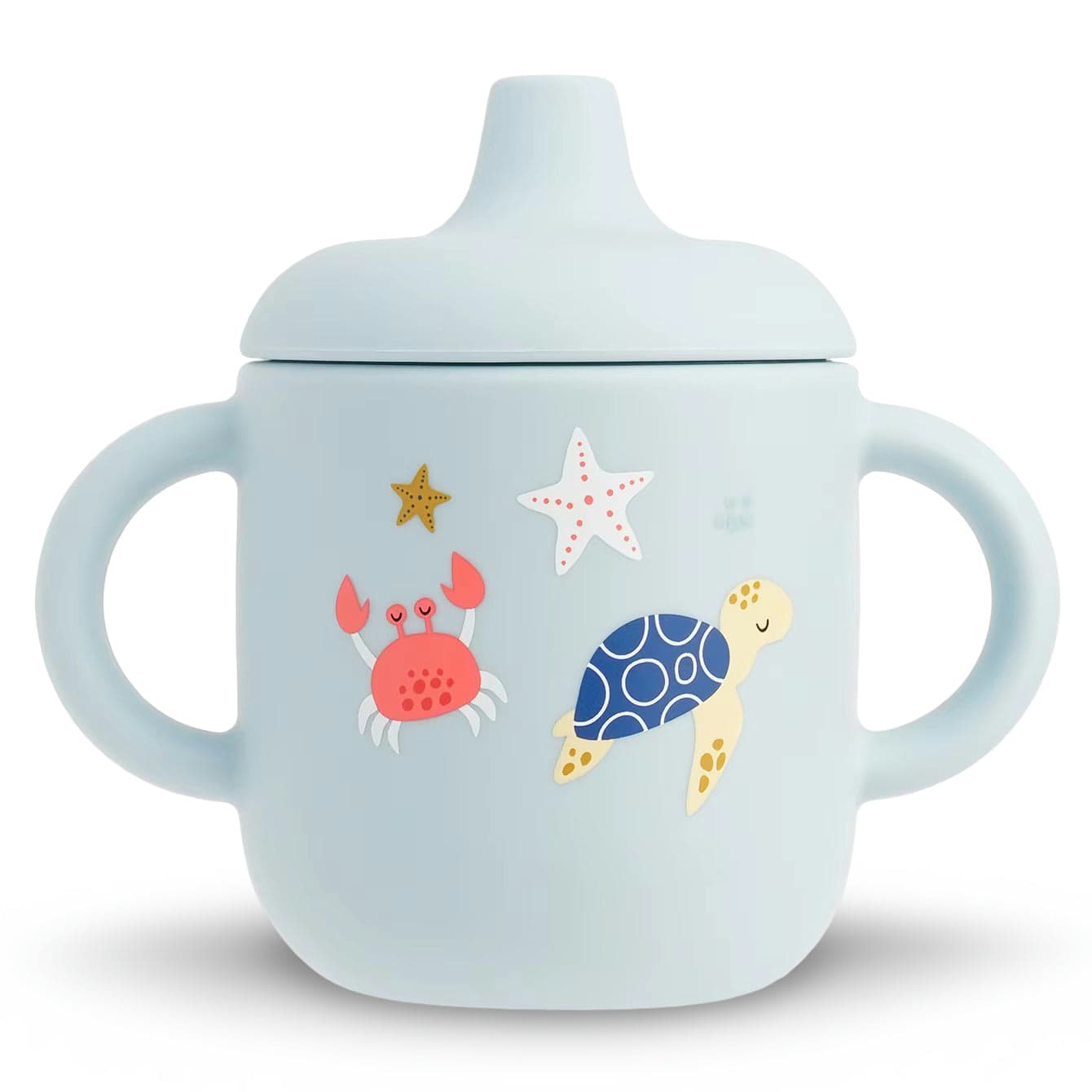
- A cup. Around six months is also a good time to start practicing with a cup of water at meals. We wrote a whole piece on which cup to try first.
What you can skip
- A baby food maker. A blender, a food processor or a fork does the same job.
- Cereal in the bottle. It is still passed around as a way to help babies sleep longer. The AAP advises against it: it can be a choking risk, adds calories, and there is no good evidence it helps sleep.
- Heated plates and warming gadgets. Food for babies should be warm at most, and it cools on its own.
- Pouches as everyday food. They are handy on a day out. At home, squeezing the puree onto a spoon lets your baby practice actually eating it.
Foods to hold back, or change the shape of
Most foods are fine for babies once they are soft enough and cut the right way. A few need care, and some are best left until later.
| Food | Why | What to do instead |
|---|---|---|
| Honey | Can cause infant botulism | None at all before 12 months, including in baking |
| Cow's milk as a drink | Not suitable as a main drink for babies | Wait until 12 months; small amounts in cooking, yogurt and cheese are fine |
| Whole grapes, cherry tomatoes, blueberries | Round and firm: the right size to block an airway | Cut into small pieces; quarter grapes and cherry tomatoes lengthwise |
| Hot dogs and sausages | Round slices are a classic choking hazard | Cut lengthwise into thin strips, then into small pieces |
| Nuts and seeds | Hard and easy to inhale | Use smooth nut butter, thinned and spread thinly, or ground nuts mixed into food |
| Raw carrot, raw apple | Too hard to break down with gums | Cook until soft, or grate finely |
| Popcorn, hard candy, marshmallows | Hard, sticky or both | Leave them for much later |
Common allergy foods like peanut and egg do not need to wait. Current US guidance supports introducing them early, around six months, alongside other foods. If your baby has severe eczema or an egg allergy, talk to your pediatrician first, because they may suggest starting peanut sooner and in a particular way.
Gagging is normal. Choking is not.
Babies gag a lot when they start eating. It is loud, their face goes red, their eyes water, and it is alarming to watch. It is also a reflex that is doing its job, moving food forward that isn't ready to be swallowed. Stay calm and let them work it out.
Choking is different, and often quiet: a baby who is choking can't cry or cough properly, and may start to turn blue. That needs you to act straight away. If you haven't done an infant first aid and CPR course, the first months of solid food are a very good time to take one.
Always stay with your baby while they eat, sitting where you can see their face. Everything else on this list is about convenience. That part is about safety, and it doesn't come in a box.
Sources
About this piece. We sell some of the things mentioned here, and we’ve tried to be straight about when they aren’t the right choice. Health and safety points follow the sources above. They are general guidance, not medical advice about your child.
The things we mention


More from the journal
Straw cup, sippy cup or open cup? What to try first
Every baby learns to drink from a cup eventually. The one you start with mostly decides how much water ends up down their front on the way.
Babyproofing, room by room: what to do first
Most babyproofing lists treat a corner guard and an unanchored dresser as equal. They aren't. This one starts with the jobs that prevent the worst injuries.
How to swaddle safely, and when to stop
Swaddling can settle a newborn beautifully. It also comes with a short list of rules that matter a great deal, and a firm end date.