Feeding
Straw cup, sippy cup or open cup? What to try first
Every baby learns to drink from a cup eventually. The one you start with mostly decides how much water ends up down their front on the way.
On this page
Somewhere around six months, when your baby starts on solid food, they can start learning to drink from a cup as well. Nobody expects much at first. A few sips, a lot of dribbling, and at least one cup launched off the high chair tray to see what noise it makes.
Which cup you start with matters less than the baby aisle makes it look. There is a sensible order to try things in, though, and a few details that save a lot of mopping. Here they are, along with what should actually go in the cup at each age.
When to start
The American Academy of Pediatrics suggests offering a cup at around six months, at the same time as solid food. At this age it is practice, not hydration. Breast milk or formula still does the real work until the first birthday, and the cup mostly holds a little water at mealtimes.
Starting early pays off later. The AAP recommends that babies move off bottles by around 12 months, and no later than 18. A baby who has had six months of practice with a cup makes that switch without much fuss. A 15-month-old who has never held one tends to have strong opinions about it.
Three kinds of cup, and what each one teaches
| Sippy cup (spout) | Straw cup | Open cup | |
|---|---|---|---|
| How it works | Tip it up and suck through the spout | Suck through a straw while the cup stays upright | Tip it to the lips and sip |
| Mess | Almost none | Very little | Plenty, at first |
| What it practices | Much the same mouth movement as a bottle | Closing the lips, controlling the tongue | The way they will drink for the rest of their life |
| Best for | Car seats and strollers | Every day, at home and out | Meals at the table |
The spouted sippy cup was designed to stop spills, and it is very good at that. The catch is what your baby does to drink from one: head back, sucking through a spout, a lot like a bottle. Many speech and feeding therapists would rather babies skipped it. To be fair, the evidence that sippy cups harm speech is thin. But there is nothing a spout teaches that a straw or an open cup doesn't teach better, so there is little reason to treat it as a stage of its own. Keep one for the car if it saves your upholstery.
Straw cups are the easy middle ground. The cup stays upright, so less ends up down the front, and pulling liquid up a straw works the lips and tongue in ways that carry over to eating. Most babies get the hang of it within a few weeks of trying, with a bit of help.
Open cups are where every child ends up. They are messy for a while, but babies can start practicing with one straight away, and it is the cup they will use at the table for good. The CDC lists drinking from a cup without a lid, while you hold it, among the things most babies can do by their first birthday.
Teaching a straw
- Start with water, a little at a time. Nothing sweet. You are teaching a skill, not a taste.
- Try the pipette trick. Dip a straw in water, put your finger over the top end, and the water stays inside. Rest the open end on your baby's lower lip and lift your finger so a few drops run in. After a few goes, most babies start closing their lips around the straw to get more.
- Move to the cup, and hold it for them. Keep it level and let them do the sucking. If nothing comes up after a few tries, the straw may be too long or the valve too stiff for them yet.
- Then let them hold it. Handles help at this stage, and so does a cup that is light enough to lift when full. Expect it to be chewed, dropped and inspected upside down. That is how it goes.
A word on valves: many straw cups have one to stop leaks, and some are stiff enough that a baby has to work hard to get anything out. If your cup's valve comes out, try it without for practice at home and put it back for the bag.
The open cup: expect puddles
Start with about an ounce of water in something small. A small cup is easier to control than a full-size one, and there is less to spill. Hold it with your baby, tip it slowly to their lower lip, and stop when they close their mouth. The bath is a good place to practice, since nobody minds a spill in there.
It takes months, not days. By 18 months, most toddlers can drink from an open cup on their own and spill some of the time, which is also a CDC milestone. The spilling part is not a sign of anything; it is just what 18 months looks like.
What goes in the cup, by age
| Age | What to offer |
|---|---|
| Under 6 months | Breast milk or formula only. No water, no juice. |
| 6 to 12 months | Breast milk or formula as the main drink, plus small amounts of water with meals: about 4 to 8 ounces a day in total. |
| 12 to 24 months | Plain whole milk, around 16 to 24 ounces a day, and water, 1 to 4 cups a day. |
| Juice | None before 12 months. After that it is not needed at all, and if you do offer it, keep it to a small amount of 100% juice. |
These amounts come from joint guidance by the AAP and other US health groups, linked at the end. One more thing worth knowing: milk or juice sipped on and off for hours, from any kind of cup, is hard on new teeth. Milk with meals and snacks and plain water in between keeps it simple.
What to look for when you buy one
- Few parts. Every valve and straw is somewhere for old milk to hide. If you can't get a brush into it, you will end up throwing it away.
- A size a baby can lift. 150 to 250 ml (5 to 8 ounces) is plenty. A bigger cup only gets heavier when full.
- Handles, at first. Two handles make the first months easier. Toddlers soon hold the cup itself, and handles become optional.
- Soft material for early days. Silicone is gentle on gums and survives being thrown. Stainless steel and BPA-free plastic are fine too.
- Something you can wash easily. Check whether the straw and lid are dishwasher-safe, and whether it is top rack only.
Where our cups fit
We sell a handful of cups, and they sort neatly into the stages above.
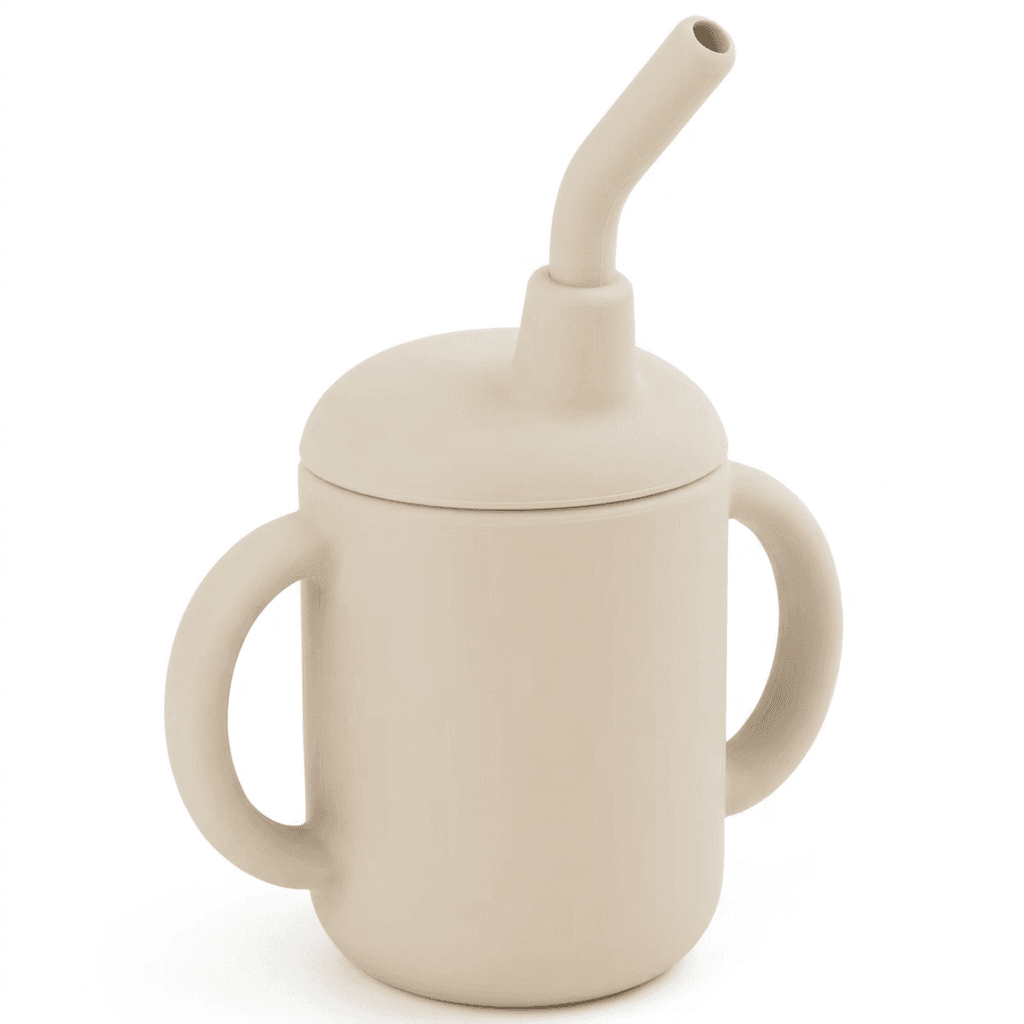
- First straw: the Silicone Sippy Cup with Straw Lid. Despite the name it is a straw cup: soft food-grade silicone, around 150 to 200 ml, top-rack dishwasher safe.
- Everyday straw cup: the Baby Straw Cup. It is leakproof and holds 200 ml, so it is the one that goes in the bag.
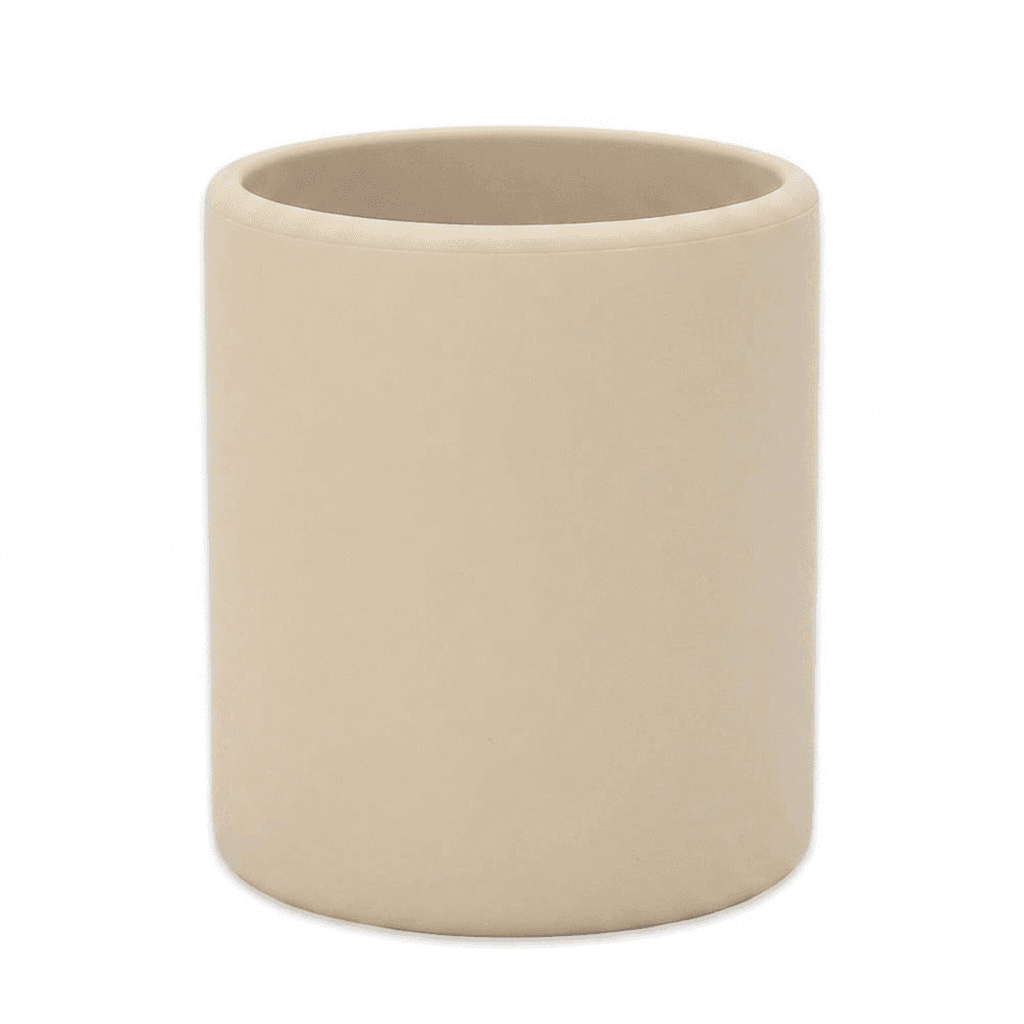
- Open cup: the Silicone Learning Cup, a small, soft open cup. Its lid is a snack lid rather than a drinking lid, so it earns a second job once your toddler is drinking without help.
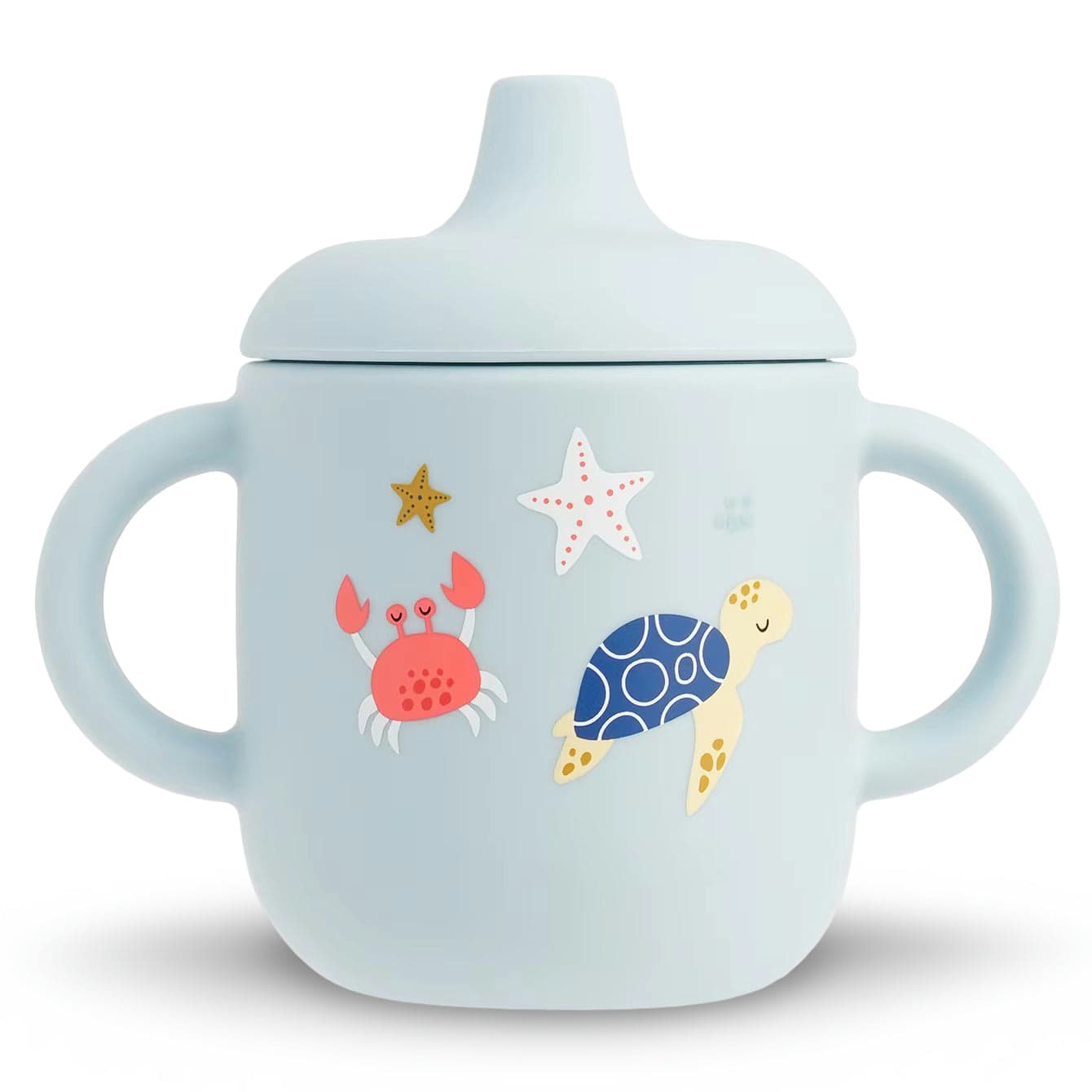
- For the car: the Baby Training Cup, a two-handled silicone cup with a spout and a leak-proof lid. Useful when spills really matter; not the one to practice with at home.
- For older toddlers: the Kids Straw Water Bottle, 250 ml with a straw and two handles, for daycare and days out.
If you only buy one, make it a straw cup, and use any small cup from the kitchen for open-cup practice. Solid food brings its own questions; our guide to starting solids covers the gear and the timing.
Sources
About this piece. We sell some of the things mentioned here, and we’ve tried to be straight about when they aren’t the right choice. Health and safety points follow the sources above. They are general guidance, not medical advice about your child.
The things we mention


More from the journal
Starting solids: the gear that helps, and what you can skip
You need less than the baby aisle suggests: a safe seat, a soft spoon, something the food can't slide off, and something to catch what falls.
Babyproofing, room by room: what to do first
Most babyproofing lists treat a corner guard and an unanchored dresser as equal. They aren't. This one starts with the jobs that prevent the worst injuries.
How to swaddle safely, and when to stop
Swaddling can settle a newborn beautifully. It also comes with a short list of rules that matter a great deal, and a firm end date.